
A star-led campaign built on cultural confidence, direct audience contact and event-style screenings offers practical lessons for a Ghanaian film sector with talent to spare but too few dependable routes to market.
A crowd, a film and a useful question
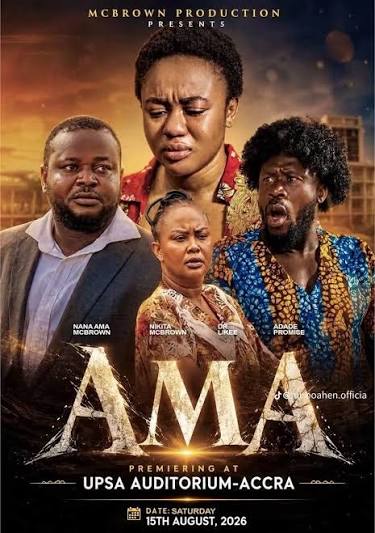
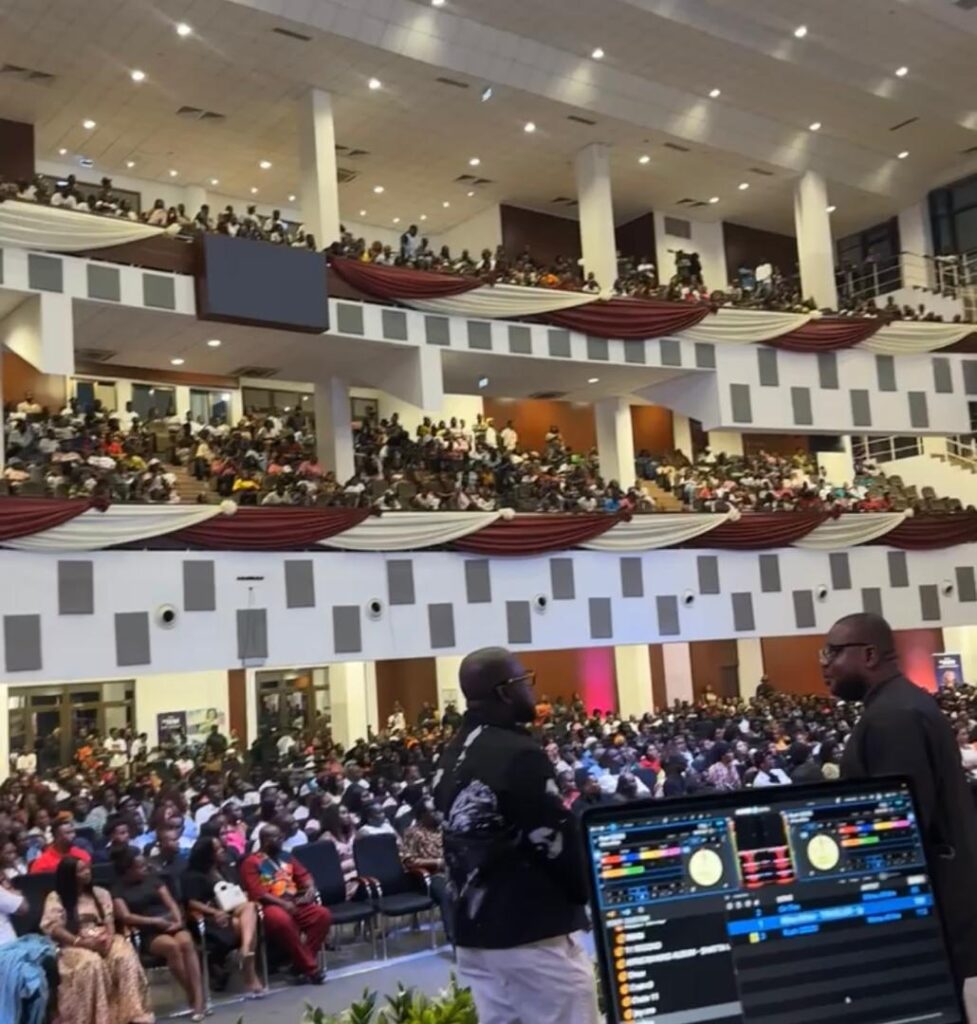
When Nana Ama McBrown took AMA to the UPSA Auditorium in Accra in August 2026, the occasion looked bigger than a conventional film premiere. The venue became a meeting point for cinema, celebrity, fashion, music and fan culture. Reports and social-media footage showed a packed, energetic audience; the production then extended its campaign beyond Accra, with further screenings promoted in Kumasi, Bechem and Sunyani.
The important question is not whether one premiere can “save” an industry. No single film can carry that burden, and Ghanaian cinema is far more diverse than one production or one star. The more useful question is this: what did AMA do to make a local-language film feel like an event people wanted to join?
That question matters because Ghana’s filmmakers are not short of stories, performers or entrepreneurial drive. What has often been less reliable is the commercial bridge between a completed film and a paying audience: sustained publicity, accessible exhibition spaces, regional distribution, audience data and financing for the long work of reaching viewers. AMA offers a timely case study in how some of those gaps can be addressed creatively without pretending that an individual campaign can replace industry-wide systems.
The campaign’s achievement was not simply visibility. It gave audiences several reasons to care before they ever entered the auditorium.
A film rooted in language and lived experience
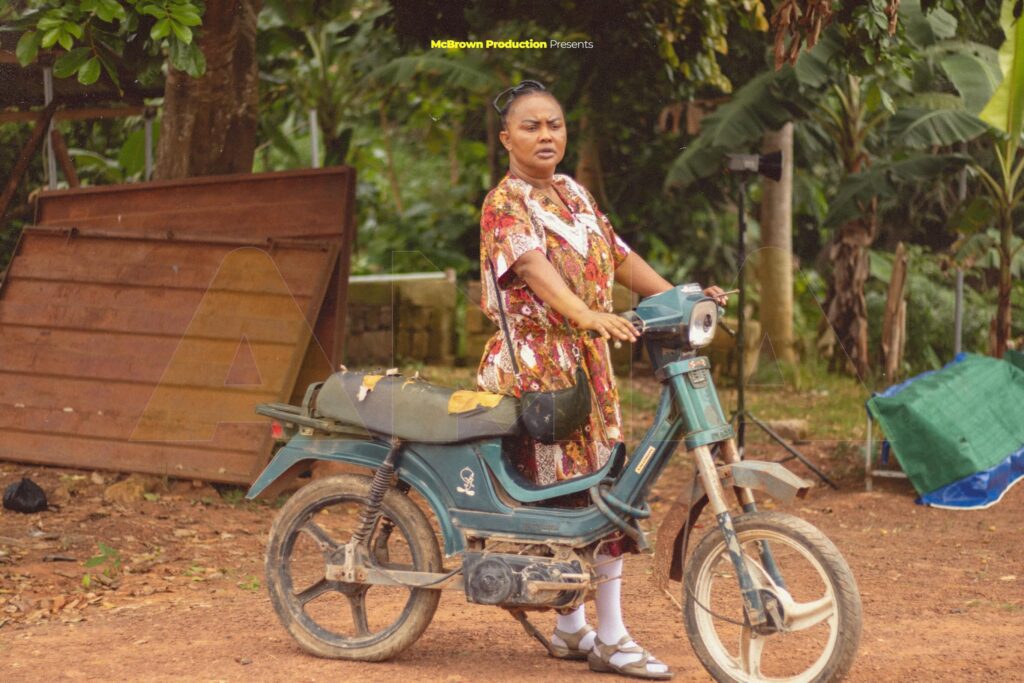
Produced under Nana Ama McBrown’s company, McBrown’s Production and promoted as an entirely Twi-language story, AMA draws on the emotional directness of indigenous-language cinema. Its coming-of-age narrative, set against an earlier period in Ghana, follows a young girl whose ambitions encounter family expectations and social pressure. Themes including parental guidance, forced marriage, honesty and the future of a talented young woman give the story an immediate cultural vocabulary.
Choosing Twi is not a retreat from ambition. It is a statement about who gets to sound natural on screen. For domestic audiences, language can deepen humour, memory and emotional recognition. For diaspora viewers, it can carry the sound of home. Subtitling and thoughtful international distribution can widen access without flattening that identity.
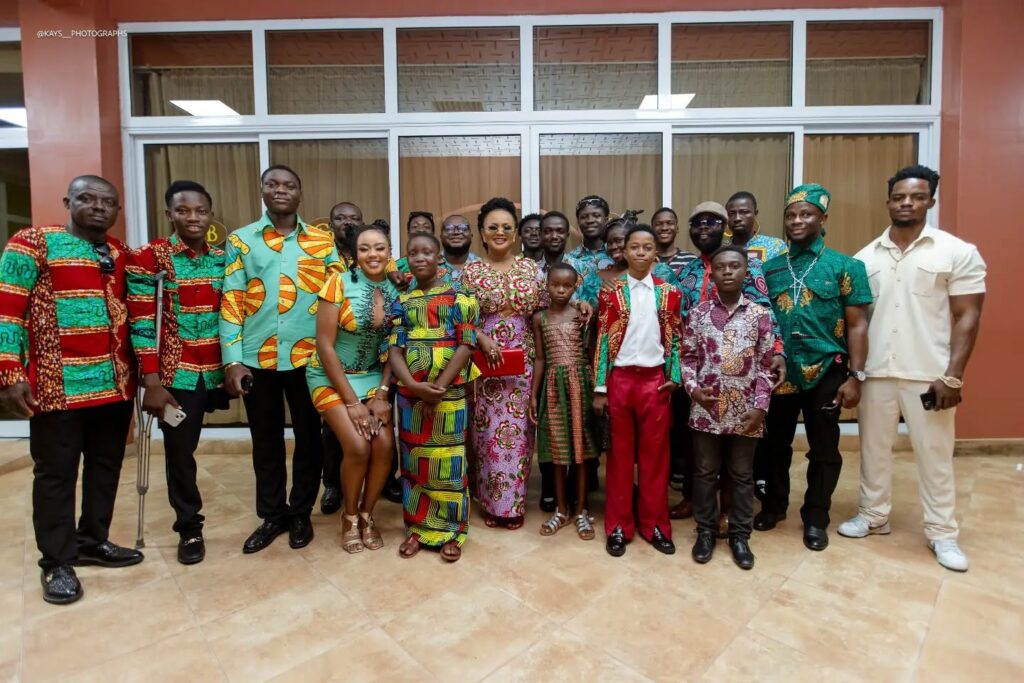
McBrown also used her position to place emerging performers beside recognisable faces, including Dr Likee. That choice carries an industry lesson of its own. Stars can attract attention, but a sustainable screen culture must continually create room for new actors, writers, technicians and producers to become visible.
The marketing playbook
AMA’s promotion worked as a connected system. Five elements appear especially important:
1. Turn the release into a cultural occasion
The strongest move was “eventisation”: the premiere was tied to McBrown’s birthday, her long relationship with Ghanaian audiences and a celebratory red-carpet atmosphere. A ticket therefore offered more than a screening; it offered participation in a public moment. Music performances, celebrity support and fashion coverage widened the story beyond film pages.
2. Use personal trust to reduce audience risk
McBrown’s career across film, television, advertising and social media gave the campaign a ready-made trust network. Her name carried familiarity, but she did not leave the brand to work alone. Repeated interviews, appearances and direct appeals converted recognition into action. The lesson for producers is not that every film needs a superstar. It is that every release needs a credible human voice and a clear promise to the audience.
3. Meet viewers where they already are
Street activations and ticket-selling floats brought the campaign into public space. Radio and television appearances reached mass audiences, while bloggers, influencers, short promotional skits and constant social posting kept the title moving through digital conversation. Advance ticket purchasing reduced friction. Instead of treating traditional and digital media as rivals, the campaign made them reinforce one another.
4. Take the film beyond Accra
Regional screenings turned distribution into a tour. Local media engagements and courtesy visits helped each stop feel locally relevant, while auditoriums and event venues offered practical alternatives where purpose-built cinema screens are limited. The approach resembles a concert tour: announce, activate, gather a community, screen, then carry momentum to the next city.
5. Make authenticity part of the sales proposition
The all-Twi identity, period setting and intergenerational cast were not merely artistic details; they became reasons to talk about the film. This is an important shift. Marketing is strongest when it grows from the work itself. A campaign cannot manufacture cultural meaning indefinitely, but it can help audiences recognise meaning that is already there.
What the campaign does and does not prove
The public response challenges the lazy claim that Ghanaians no longer care about Ghanaian films. Audiences respond when a release feels culturally relevant, well promoted and worth leaving home for. Yet public excitement should not be confused with audited commercial performance. Precise attendance and revenue claims should be published only when supported by ticketing records, venue capacities or independently verifiable box-office data.
That distinction is healthy for the entire sector. Reliable numbers help producers learn which cities, prices, channels and messages work. They also help investors and public agencies evaluate risk. Ghanaian cinema needs not only applause, but better measurement.
The campaign also should not become a template that only famous personalities can use. Personal brand equity can temporarily bridge weak distribution, but an industry cannot depend on every producer having McBrown’s reach. The deeper opportunity is to translate these tactics into repeatable infrastructure: professional release calendars, regional exhibition partnerships, online ticketing, rights protection, audience databases and transparent reporting.
A policy moment worth using
AMA arrived as public policy was again turning attention to film. Ghana’s 2026 Budget allocated GH¢20 million as seed money for a Film Development Fund, and subsequent reporting indicated that an initial tranche had been released. The fund is intended to support areas that include production, training, research, distribution, marketing and infrastructure.
The allocation is encouraging, but funding will matter most if it strengthens the full route from script to audience. A beautifully produced film can still disappear when marketing begins too late or distribution is improvised. Support schemes should therefore treat audience development, data collection, publicity planning and regional exhibition as core production concerns not optional activities at the end.
Private producers, broadcasters, exhibitors, brands and public institutions all have roles to play. The constructive lesson from AMA is that the demand side of the industry can be cultivated. Public funding can help make that work less dependent on a single personality and more accessible to producers across languages, regions and genres.
A hopeful signal, not a verdict
It would be unfair to describe Ghana’s film industry only through what it lacks. Across Kumasi, Accra and other creative centres, filmmakers have kept producing through difficult economics, changing technologies and uneven distribution. Their persistence is the foundation on which any revival must be built.
What Nana Ama McBrown has done with AMA is to add a highly visible demonstration of audience mobilisation. She has treated promotion as creative work, local language as an advantage, regional audiences as essential and the premiere as the beginning of a journey rather than the end of production.
The film’s lasting contribution may therefore be larger than its immediate run. It reminds Ghanaian cinema that audiences do not simply wait to be found. They are invited, listened to, reached repeatedly and given a reason to belong. If that lesson is matched with stronger financing, distribution, exhibition and transparent data, AMA will stand not as an exception, but as one useful marker in a broader Ghanaian film renewal.
By Kwaku Duah Prempeh