
For generations, two simple words have carried enormous weight for many boys growing up in Ghana: “Man up.”
They are words often spoken casually, sometimes with good intentions. Yet behind them sits a powerful social expectation: a boy must be strong, he must endure. he must not cry too much, complain too loudly or reveal too readily that he is afraid, confused or hurting but what happens when the boy who has been taught to suppress his pain eventually becomes a man?
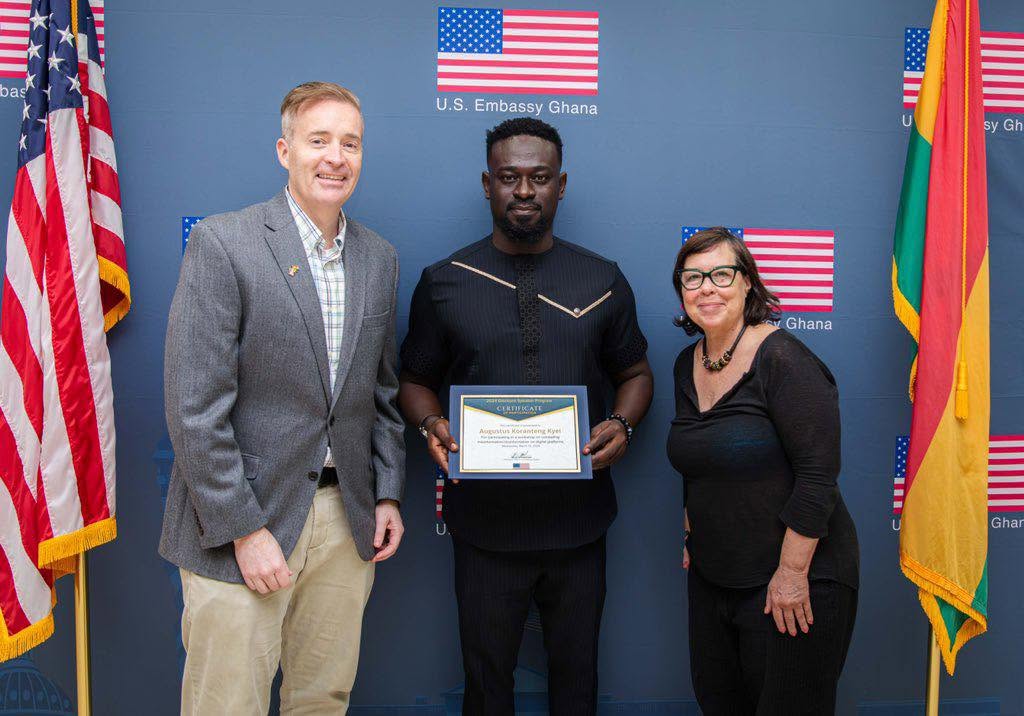
That question lies at the heart of a growing advocacy movement led by Ghanaian online journalist and humanitarian Augustus Koranteng Kyei, popularly known as Kobby Kyei.
Through his Boys Lives Matter campaign, Kyei is challenging long-held assumptions about masculinity and pushing an uncomfortable but increasingly important question into Ghana’s public conversation:
Who is listening when boys are hurting?
For Kyei, the campaign is not an argument against the empowerment of girls. Rather, it is a call for balance. It is a reminder that building a healthier society requires intentional investment in both girls and boys.
“Boys are part of Ghana’s future,” he has said. “The boys we neglect today become the men, fathers, leaders, workers and decision makers of tomorrow.”
From Blogger to Humanitarian Storyteller
Kobby Kyei’s journey into advocacy did not begin with Boys Lives Matter.
Born in Agona Duakwa in Ghana’s Central Region, Kyei entered Ghana’s blogging space in 2017, initially covering lifestyle and entertainment. As his career developed, however, his attention increasingly shifted from celebrity stories and entertainment headlines towards human-interest journalism, humanitarian causes and social development.
That evolution has become central to his identity as a journalist.
Rather than simply telling stories about people in difficult circumstances, Kyei began asking what could happen after those stories were told. Could journalism move beyond visibility to intervention? Could a camera become a bridge between someone in need and someone capable of helping?
“I asked myself, if I tell this boy’s story and walk away, what changes?”
That question appears to have transformed both his journalism and his advocacy.
Over the years, his social-impact work has earned recognition within Ghana’s humanitarian space. Humanitarian Awards Global, for instance, listed Augustus Koranteng Kyei among its 100 impactful Ghanaian changemakers in 2022 and again among its recognised changemakers in 2024.
Perhaps the more revealing measure of his work can be found in individual stories.
Kyei has recounted how documenting the story of one young boy helped connect him to Presbyterian Boys’ Secondary School, Legon. The student would later progress to the University of Cape Coast.
For Kyei, such experiences reinforce a philosophy that increasingly defines his work: a story should not merely attract attention; where possible, it should inspire action.
When Nobody Asks If the Boy Is Okay
The origins of Boys Lives Matter came from what Kyei describes not as one dramatic encounter, but a pattern.
Across different communities, he encountered boys dealing with poverty, child labour, school dropout, abuse, streetism, broken homes and a lack of mentorship.
“What struck me was how often society expects boys to be strong without asking whether they are okay,” he explained.
The campaign began publicly taking shape in 2025 and has since expanded beyond online advocacy.
Kyei has taken the conversation into schools and communities through mentorship, humanitarian interventions and direct engagement with young people.
At the Shine Summit — Boys Lives Matter edition at PRESEC Legon, boys were encouraged to discuss emotional pressure, identity, mentorship and the challenges they face while growing into adulthood.
Another engagement involving hundreds of boys in Tema produced an unexpectedly emotional moment. According to Kyei, after speakers encouraged the students to embrace them, some of the boys became emotional and said they had rarely experienced that kind of affection.
Such moments speak to an aspect of childhood that money alone cannot address.
“Sometimes a boy is not looking for money or a solution,” Kyei has observed. “He simply wants an adult he can trust enough to say, ‘This is what I’m going through.’”
Strength Without Silence
For generations, masculinity has often been associated with endurance but Boys Lives Matter is attempting to separate strength from silence.
Kyei argues that repeatedly telling boys to “be a man” without teaching them how to process emotions can have consequences later in life.
“A boy who is constantly told to ‘be a man’ can sometimes grow into a young man who doesn’t know how to ask for help,” he says.
His argument extends beyond emotional expression.
The campaign raises questions about mentorship, personal hygiene, relationships, sexual abuse, education, discipline and the role of fathers and other male figures in the development of boys.
Parents, Kyei argues, must understand that paying school fees, providing food and buying clothes are only part of raising a child.
“Emotional presence matters too.”
That philosophy is increasingly being translated into practical action. Boys Lives Matter has supported educational interventions and school engagements, while partnerships have helped extend its reach. In July 2025, the campaign partnered with Little Givers Foundation to provide uniforms and learning materials to boys at Yeboakrom Primary and JHS in the Eastern Region. In 2026, United Way Ghana also partnered with Kyei through its Day of Caring programme for an engagement with boys in the Greater Accra Region.
Not Boys Versus Girls
Perhaps one of the most important distinctions Kyei makes is that Boys Lives Matter is not a rejection of advocacy for girls.
“I don’t see BoysLivesMatter as a competition for attention,” he has explained.
That distinction matters.
Decades of advocacy for girls have helped bring important conversations about education, child marriage, sexual violence, economic empowerment and equality into the mainstream. Kyei’s campaign does not argue that those efforts should diminish.
Instead, it asks society to recognise that gender equality cannot be achieved by allowing another group of children to disappear emotionally.
The future woman and the future man will eventually meet in homes, workplaces, communities and institutions. Empowering one while failing to intentionally nurture the other risks carrying unresolved problems into the next generation.
Building the Men of Tomorrow
Kobby Kyei does not claim that one campaign can solve every challenge facing Ghanaian boys.
His ambition is more foundational: to make society notice them.
He wants schools to become safer spaces for boys to discuss bullying, abuse, family difficulties and emotional struggles. He wants stronger mentorship structures. He wants parents to become emotionally present. And he wants vulnerable boys to be identified early enough to receive education, skills, counselling and opportunities before their struggles become crises.
“My responsibility is to use the platform I have to identify problems, amplify voices, connect people to solutions and inspire others to act,” he says.
Perhaps that is the real power of Boys Lives Matter.
It is not simply asking Ghana to rescue troubled boys. It is asking Ghana to rethink how boys are raised in the first place because behind the toughness society demands may be a frightened child. Behind the silence may be a story nobody has asked to hear and and behind every boy struggling to understand what it means to “be a man” is a future father, husband, colleague, leader or citizen still being formed.
For Kobby Kyei, changing that future begins with a deceptively simple act.
Listen to the boy before asking him to become the man.
By Kwaku Duah Prempeh